Product overview
Get a complete view of the tools that power your business
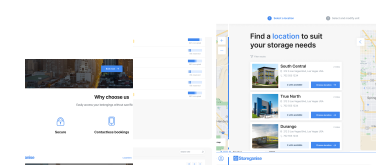
Get a complete view of the tools that power your business
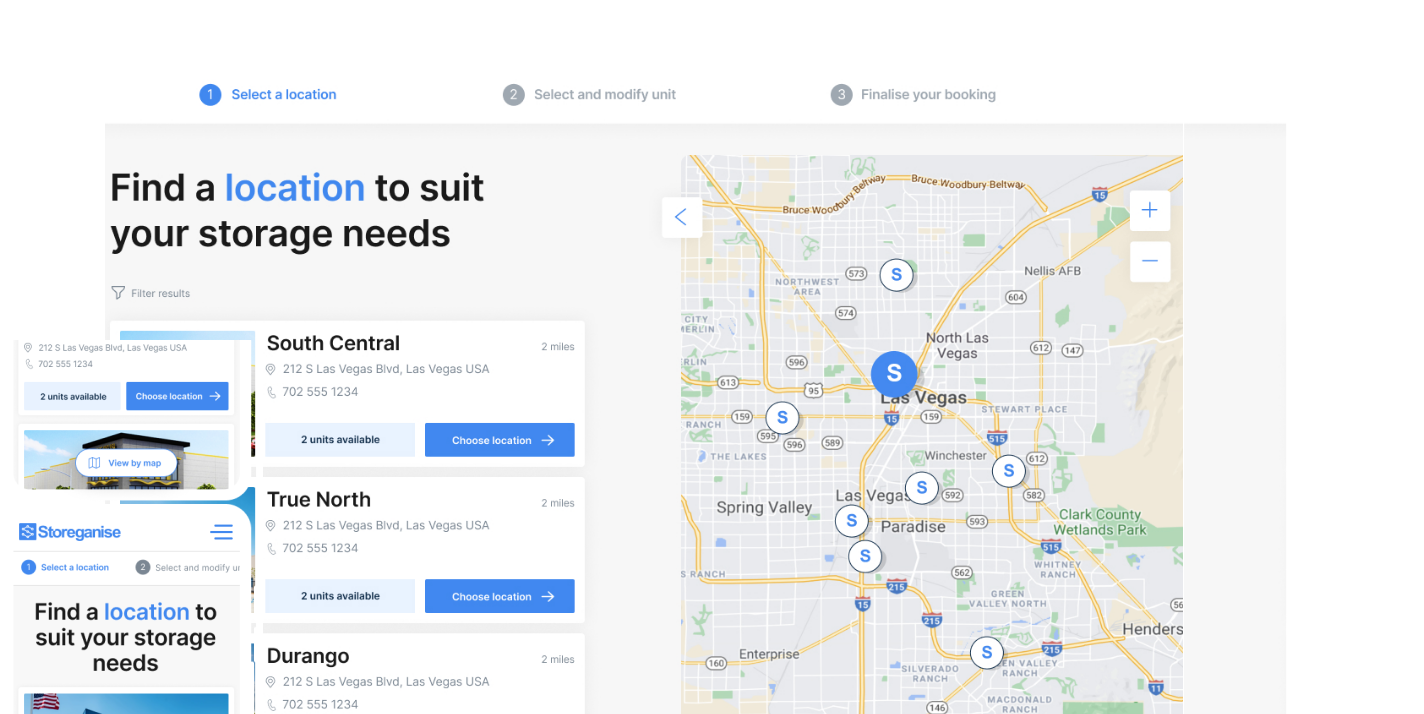
Let customers book and manage storage with ease
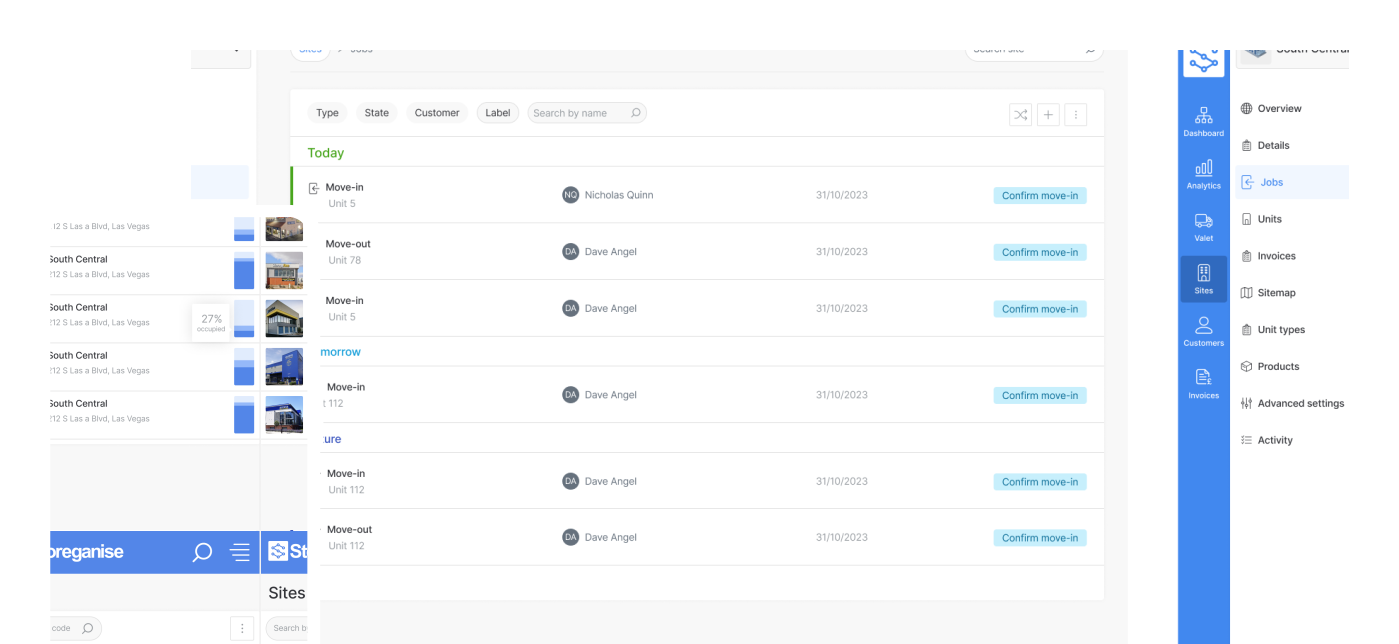
Manage your entire business in one place
Attract new customers with a website built for self-storage

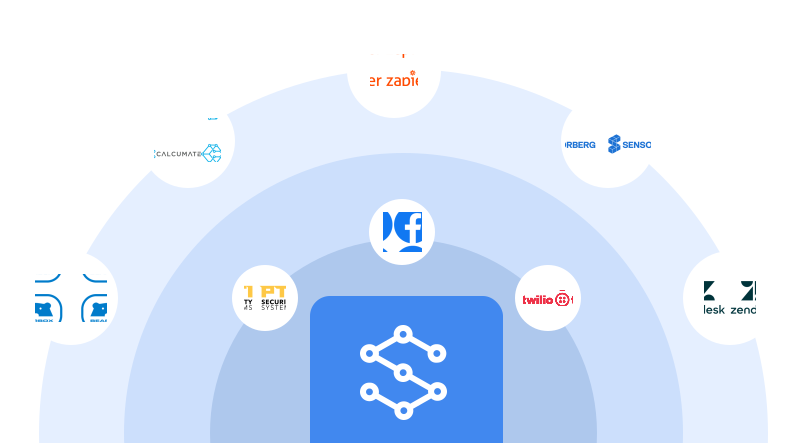
Extend your business logic with endless integrations
How smart operators use shipping containers and automation software to unlock niche markets and turn storage into high-margin, flexible, tech-powered businesses.

Miles Davison
2025/6/27
Self-storage is evolving, and the smartest operators are thinking beyond traditional roll-up units. Furthermore, storage containers have become the go-to solution for flexible, fast, and cost-effective deployments, offering far more than just an alternative to concrete buildings. When paired with automation-first software like Storeganise, these rugged steel units open the door to high-margin niche markets that traditional storage facilities simply can’t reach.
Among the most creative and influential storage-container uses in self-storage is seasonal micro-warehousing for e-commerce businesses. Small e-commerce businesses normally have enormous demand spikes over short windows like Black Friday, holiday campaigns, or local mall promotions, but all-season warehouse storage isn’t lucrative enough for them. Storage containers are perfect middle ground: operators can deploy a limited set of 20-foot containers behind final-mile delivery terminals, equipped with electronic locks for convenient, flexible access. Pick-and-pack personnel can pull from/inventory on demand using mobile access and reduce friction and speed up operations. Storeganise makes managing such an installation effortless. Merchants can be assigned individual units with real-time tracking of stock, metering can be automatically performed on a basis of cost-per-peak-season-day, and access can be terminated remotely at the precise moment when any contract expires, keeping turnover snug and margins healthy.
Concert promoters, wedding planners, and sports leagues all truck mountains of staging, chairs, and lighting from venue to venue. Providing mobile storage nodes adjacent to fairgrounds or stadiums eliminates round-trip hauling. Configure each container’s digital profile in Storeganise so renters can book exactly the size they need for the event window, pay online, and unlock units via QR code on arrival.
Urban pop-ups often struggle with stockroom space. Position branded containers in alleys or rooftop car parks as secure mini-warehouses tied to short-term leases. Storeganise’s booking widget embeds in the retailer’s site, letting them self-extend the lease if sales outperform forecasts.
City councils and NGOs pre-position medical kits, bottled water, and generators inside tamper- proof containers at evacuation zones. When an emergency hits, officials remotely release access codes through Storeganise so first responders and only first responders can retrieve supplies.
Wine collectors, art dealers, and even biotech labs need tight temperature and humidity control. Retrofit high-cube containers with plug-and-play HVAC panels; pair IoT sensors with Storeganise’s open API to trigger alerts or auto-bill for premium climate add-ons.
General contractors waste hours locating compressors, lasers, or PPE scattered across jobs. Set a container on-site as a secure tool crib. Workers reserve equipment in Storeganise; RFID readers log check-in/out, feeding utilisation reports that curb theft and idle inventory.
Freelancers and micro-brands often need both a laptop desk and a lock-up for stock. Stack a row of container offices beside storage units, share Wi-Fi, and offer a bundled subscription. Storeganise tracks dual access rights door codes for the co-working pod and padlocks for inventory units on a single customer profile.
Need to shift a cluster of containers from an underperforming lot to a booming festival site? With Storeganise, each unit’s GPS tag syncs automatically, and geo-fenced access rules update in real time. Ten minutes after the forklift sets a container down, customers can unlock it with their phones no onsite technician required.
Seasonal demand surging? Drop in a fresh stack of containers and bulk-create the new units inside Storeganise with a single click. The platform clones rate plans, promos, and occupancy rules across every added unit, so pricing and availability stay perfectly in sync without spreadsheet gymnastics.
Containers are built to withstand oceans, so they shrug off daily wear in a storage yard. Storeganise elevates that toughness with sensor integrations: humidity spikes, door-slam vibrations, or temperature swings trigger automated maintenance tickets and customer notifications before small issues turn into costly downtime. Without a unified software layer, each creative vertical becomes a manual nightmare. Storeganise keeps every container, regardless of size, climate spec, or location visible on one dashboard, freeing you to chase the next high-margin niche instead of chasing paper trails.
Start with niche markets or fleeting spurts of storage demand. These are like seasonal festival circuits, wildfire evacuations, urban delivery hubs, new direct-to-consumer (DTC) brands that require agile micro-warehousing, and underserved audiences by traditional storage facilities but eager for access, speed, or proximity.
Once you know where demand exists, find creative real estate solutions. Rooftops, underutilized parking lots, rural highway lay-bys, or idle industrial corners can all become profitable storage sites. Focus on low-commitment leases, short-term permits, or public-private partnerships to keep costs low and deployments agile.
Tailor each container to suit its intended use. Add ventilation for general storage, climate control for sensitive goods, or industrial shelving for high-frequency users. Smart locks and motion sensors can boost both security and automation, especially when paired with remote access systems.
Digitally onboard every unit into Storeganise. Upload photos, tag key attributes (size, features, climate status), and assign rate plans. This step ensures every container is trackable, rentable, and manageable through a single interface, critical for scaling and remote oversight.
Set up a simple landing page tailored to your chosen niche or local area. For help crafting messaging that converts, use these self-storage marketing strategies to better reach your niche audiences. Embed the Storeganise booking widget to allow users to check availability, reserve units, and pay all without needing to speak to staff. Match your messaging to your market: speed and simplicity for DTC brands, resilience and readiness for emergency responders, and so on.
Go live with a minimal number of units to test interest and refine operations. If you’re considering this model from an investment perspective, this guide on how to invest in self storage offers key financial and strategic insights. Monitor occupancy, usage trends, and customer feedback in real time through Storeganise. Once a niche proves viable, replicate the model in new locations with similar profiles, fast, efficient, and data-driven.
Many of these creative models align with broader self storage industry trends that are shaping how operators approach flexibility, technology, and space.
Self-storage doesn’t have to mean mile-long rows of roll-up doors and overhead fixtures anymore. Paired shipping containers' modular strength and Storeganise's cloud-native automation yield a platform you can pivot on a dime into niche markets, stabilize seasonal slumps, and deliver customer experiences that the big-box boys can’t hope to replicate. Containers provide pick-up-and-go mobility, telescoping capacity to stack and flex space on demand. Storeganise converts that ground-space flexibility into software scalability on one dashboard, with no bottlenecks.
Put steel on the ground, put code in the cloud, and you turn ordinary boxes into extraordinary businesses. And if you’re curious how these same principles apply to residential builds, have a look at Cabin Homes and Container Homes: Understanding the Key Differences for a broader perspective on modular living and construction innovation.
Miles Davison has been the CEO of Storeganise since its inception in 2015, bringing a wealth of experience from his diverse background in logistics, investment banking and business management.
View bio