Product overview
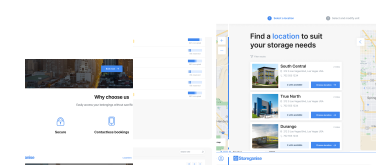
Get a complete view of the tools that power your business
Get a complete view of the tools that power your business
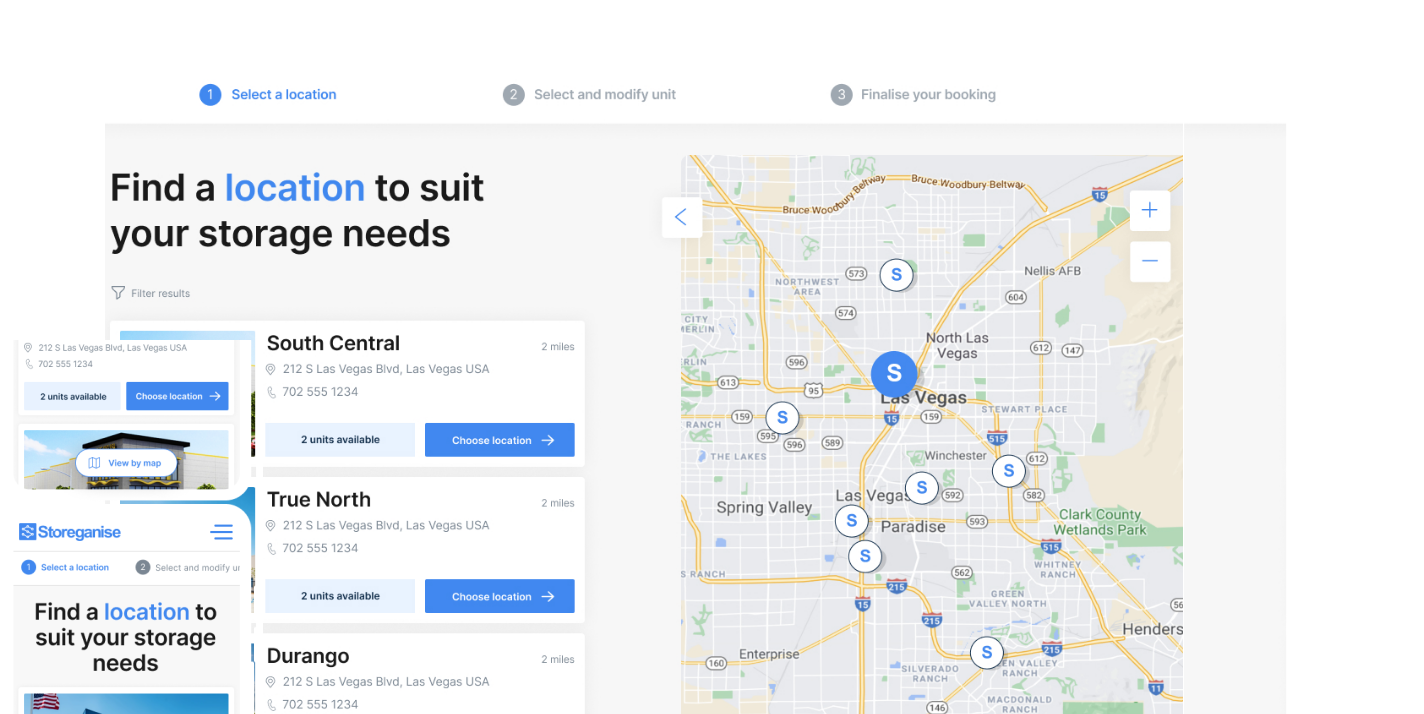
Let customers book and manage storage with ease
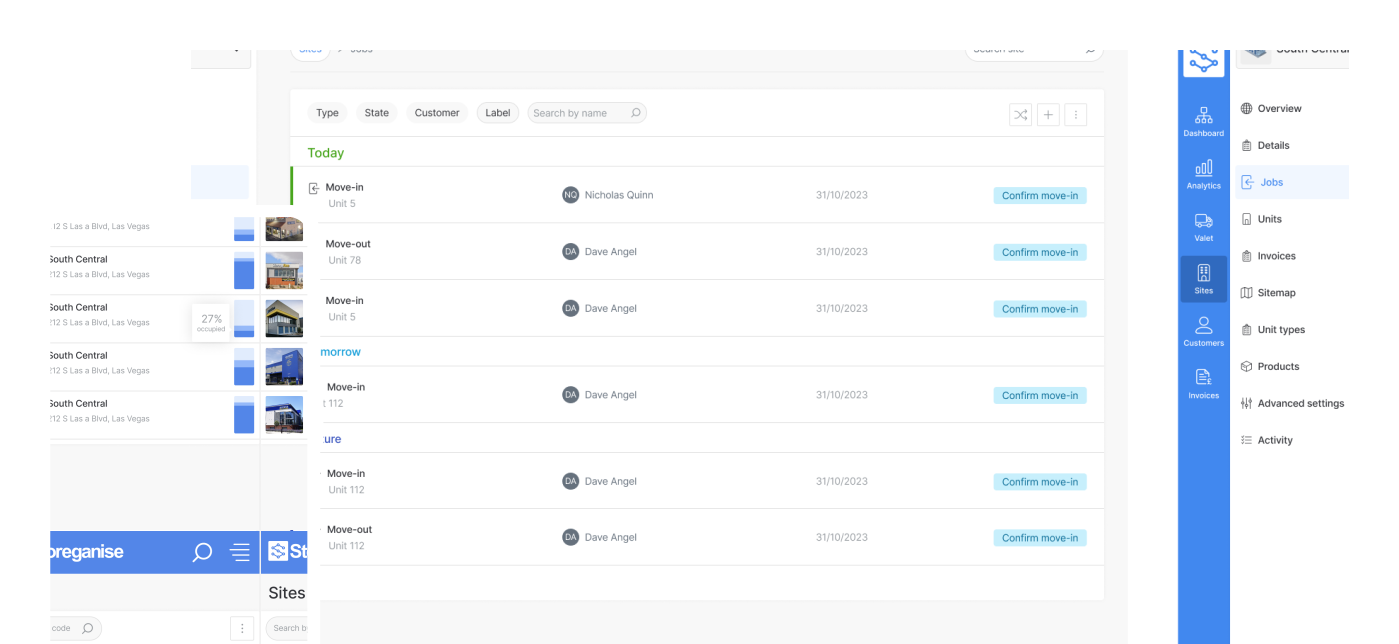
Manage your entire business in one place
Attract new customers with a website built for self-storage

Extend your business logic with endless integrations
Find the latest self-storage statistics and trends driving the industry. Get important insights into the current state of the industry and future projections.

Jack Colemanzo
2026-03-14
Key Takeaways
The market is expected to grow to $72.4 billion in 2025 and could exceed $138 billion by 2034, depending on regional expansion and demand trends.
Technology adoption, such as self storage websites, cloud systems, online leasing, and management software, is transforming facility operations.
Rising rental rates, increasing investments, and ongoing construction show that self storage remains one of the most resilient real estate sectors.
Self storage has experienced fascinating market trends in the 21st century, with businesses in this sector attracting increased customer attention. The self storage industry in the US generated $45.41 billion in revenue in 2025 and continues to grow steadily, showcasing its rapid growth and significance.
With the increasing demand for space, self storage has become one of the most viable solutions for people looking to declutter their homes or store goods for their e-commerce businesses.
“Landlords grow rich in their sleep.” — John Stuart Mill
This observation highlights why real estate sectors such as self storage continue to attract investors looking for stable and long-term returns.
Despite the growth, public awareness of self storage services remains relatively low, with only 43% of the population familiar with the concept and just 8.7% actively considering its use. Nonetheless, those who do use self storage report high levels of satisfaction, even though 39% of customers perceive the cost as high. This highlights an opportunity for facility owners to enhance their outreach efforts and address pricing perceptions to attract a broader customer base.
Let’s examine some eye-popping self storage statistics and trends in this 2026 Self Storage Market Report to see how big the industry has become and where experts think it’ll go next.
The self-storage industry has shown consistent revenue growth over time, averaging an 8% increase. As of the most recent count, there are 52,301 self-storage facilities across the United States. The rate of new facilities opening has also accelerated; from 2010 to 2019, an average of 439 new facilities opened annually, while 2020 to 2023 saw this figure jump to 735 new facilities per year. Occupancy rates have varied slightly in recent years as shown in the below graph
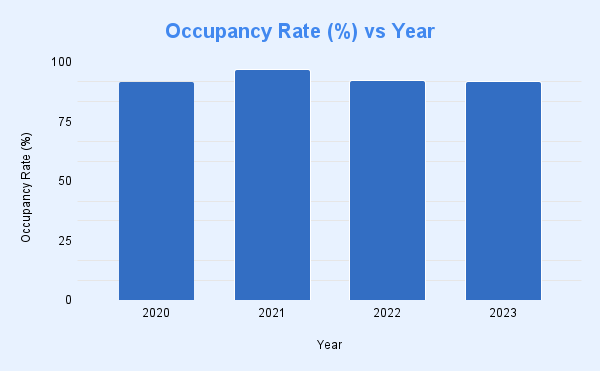
Insight: The steady growth in revenue and occupancy rates highlights the increasing reliance on self storage solutions. With more facilities opening each year and a diverse customer base, the industry is poised for continued expansion.
Updated 03/14/2026 This page presents the latest statistics on the self storage industry, compiled by Storeganise. We continuously update this page as new data becomes available. If you have data to contribute or any questions regarding the information here, please email us at editor@storeganise.com.
US
The United States now has over 2.1B+ sq. ft, making it the largest self-storage market globally.
The self storage industry shows no signs of slowing down. In fact, the latest statistics show unprecedented growth that is projected to continue for years to come. The global self storage market was valued at about $63.98 billion in 2025 and is expected to reach around $67.77 billion in 2026, with long-term projections exceeding $113 billion by 2035. [Source: Precedence Research]
Europe
Similarly, Europe's self storage market is thriving, boasting 9,575 facilities that cover a total of 16.5 million square meters of space. The UK leads the charge with a 34.6% market share, followed by France at 15.8%, Germany at 12.6%, and Spain at 11.6%. This regional distribution underscores the diverse demand across Europe and the potential for further growth in underrepresented areas.
Global
On a global scale, the self storage business is set to grow at an even faster pace of 4.15%. Valued at $64.14 billion in 2023, projections indicate the market will amount to $85.27 billion by 2030. Driving this expansion is the ever-increasing demand for extra space. As populations rise and living spaces shrink, people are accumulating more belongings than they have room for at home.
For those looking to capitalise on this booming industry, now is the time to act. Whether you’re considering investing in a new facility, expanding an existing one, or simply exploring the market, the potential for significant returns is substantial. Read on for some interesting self storage trends defining the future of this essential industry. The self-storage market is expected to grow from $68.31 billion in 2025 to $73.54 billion in 2026, reflecting a CAGR of 7.7%.
The self-storage market is projected to experience a steady Compound Annual Growth Rate (CAGR) of 5.91% from 2024 to 2034. Starting with a market size of $60.41 billion in 2024, the industry is set to expand significantly over the next decade, reflecting its growing importance and demand across various sectors.
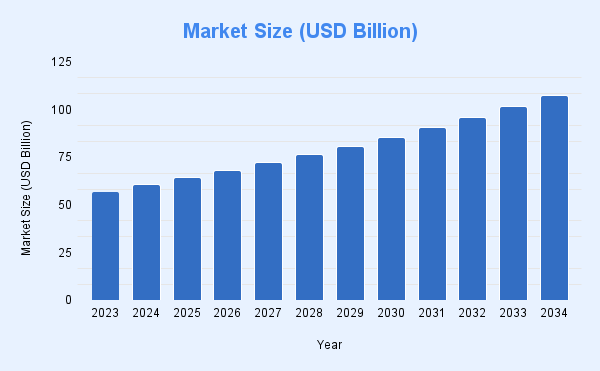
Source: Precedence Research
Insight: The notable growth rate highlights the increasing demand for self storage solutions. Investors and business owners should consider the rising need for storage space as a key driver for future investments.
So, what are some of the trends allowing self storage facilities to cater to this increasing demand?
Learn The Exact Steps on How To Set Up Your Self Storage Facility In This 5 Minute Read
Key Lessons from Industry Experts
The Psychology of Self-Storage Pricing
How to diversify your revenue streams
Steps to set you up for success
The following trends (both current and emerging) are shaping the future of the self storage industry:
In today’s modern world, virtually all activities occur online. As a result, creating a website and establishing a presence on social media is essential to any business's modern success. In fact, a recent survey by Forbes Adviser reveals that 83.5% of small businesses with a website report that these platforms have made their business more efficient and accessible to customers.
Retail giants like Walmart and Amazon aren’t the only ones competing in the digital sphere. Self storage facility owners are increasingly adopting websites for their business to accommodate consumer trends and meet the increasing demand driven by increased urbanization and the need for additional storage space.

Any investor looking to build or invest in a self storage facility today should consider creating a reliable and speedy website. A well-designed website can help address various issues and attract new customers as the future of the self storage market leans towards increased technology adoption.
Recognizing the importance of digital presence, we've recently added the ability to create and edit your website directly from the Storeganise dashboard. This feature enables you to effortlessly manage your online presence, ensuring that your business stays competitive in this rapidly growing market.
The days of the merchant sitting at a desk with a calculator and a drawer partitioned to hold different currency denominations are long gone. In today’s fast-paced world, self storage companies are adapting well to dealing with various costs. With more self storage businesses now using specialized software for budgeting and financial management, digital solutions have become the norm. A self storage software like Storeganise allows you to compute billing and accounting tasks with ease, helping you manage costs, taxes, and profits efficiently.
If you plan to join this trend, look for software with integrated payment processing, real-time reporting, and automated reminders. These features are key for streamlining operations and enhancing customer satisfaction. Also, opt for software that scales as your business grows and evolves.
In the fast-paced world of self storage, keeping track of consumer data and finances can be a daunting task. It's all too easy to misplace paper records or lose track of electronic data within spreadsheets. This is why robust security protocols are crucial to safeguarding sensitive information.
As your self storage business expands, managing new expenses, fluctuating market prices, tax obligations, utility bills, and payments from both new and overdue accounts can become increasingly complex. Recent self storage industry statistics reveal a growing trend: more self storage businesses are utilizing advanced data management software to streamline their operations and protect customer data.
Today, the industry is rapidly adopting AI-driven monitoring systems and implementing tighter ID checks to bolster security.
As Google co-founder Larry Page once explained: “Technology should do the hard work so people can do the things that make them happiest.” — Larry Page, Fortune Interview
Digital locks and biometric identification are becoming the norm, reducing reliance on physical keys and enhancing access control.

Today, the industry is rapidly adopting AI-driven monitoring systems and implementing tighter ID checks to bolster security. Digital locks and biometric identification are becoming the norm, reducing reliance on physical keys and enhancing access control. A diverse range of data management software is available that not only shields your data from viruses and unauthorized access but also keeps track of overdue payments. By automating calculations, these tools virtually eliminate human errors, ensuring your information remains intact and secure.
For self storage operators, embracing these technological advancements is not just beneficial; it's becoming essential. By adopting these innovative solutions, you can maintain order and security in your consumer data, allowing you to focus on what truly matters—growing your business.
The self storage industry's shift to cloud technology is remarkable; facilities are increasingly seeking secure and more reliable ways to manage databases. With cloud services, self storage owners can control their storage units from any location on Earth, allowing for convenient data retrieval.
Cloud storage services are also cost-effective, preventing costly database crashes and restoration. What’s more, database failures are rare due to cloud services’ built-in repair systems.
Despite various marketing techniques, the time from initial inquiry to a signed lease can vary widely. However, most of the work in selecting a self storage facility can now be done online. According to self storage industry statistics, in 2024, many self storage businesses are adopting online leasing to streamline this process.
To fully exploit this trend, ensure your website provides everything needed for a positive customer experience. Enhance the booking process by using reliable self storage software that automates billing and sends invoice reminders on time.
Sustainability is fast becoming a cornerstone of the self storage industry, with 73% of operators recognizing its importance. Common initiatives include installing LED lighting, using recyclable packaging materials, installing climate control systems, and providing EV charging stations.
About 58% of investors are willing to pay a premium for properties equipped with renewable energy sources, underscoring the financial and environmental benefits of sustainable practices. By adopting these practices, the industry is reducing its carbon footprint and attracting environmentally conscious customers.
Self storage facilities are enhancing customer convenience through various initiatives. User-friendly websites and online platforms now allow customers to book and manage storage units easily. Many facilities also offer contactless access options, enabling customers to enter the premises and access their belongings without physical interaction. These conveniences improve the overall customer experience and cater to evolving needs and preferences.
Investment in the self storage sector is on the rise.
Legendary investor Warren Buffett summarised the logic behind strong real estate investments: “Price is what you pay. Value is what you get.” — Warren Buffett, Berkshire Hathaway Shareholder Letter
This principle explains why investors continue to view self storage properties as reliable long-term assets.
In 2024, €875 million in transactions was recorded in Europe, a figure that has tripled compared to the previous year. Key deals include strategic acquisitions by major players like Shurgard and a growing focus on long-term “evergreen” funds dedicated to self storage properties, reflecting investor confidence in the sector's robust future.
It’s clear that the self storage industry is growing rapidly from year to year, and facility owners are adopting these trends to keep up with the increasing demand. But just how fast is this expansion happening in different regions of the world?

The future of the self storage industry looks strong as demand continues to increase worldwide.
“If you double the number of experiments you do per year, you’re going to double your inventiveness.” — Jeff Bezos
This mindset explains why many storage companies are experimenting with technologies such as smart access systems, automated pricing, and digital leasing platforms.
The future of the self storage industry looks strong as demand continues to increase worldwide. Market analysts expect steady expansion due to urban population growth, rising consumer spending, and the increasing popularity of flexible storage solutions.
One major driver is the rise of e-commerce businesses and remote workers who need extra space to store inventory and equipment. Small online sellers often rely on self storage units instead of renting expensive warehouses.
Technology will also play a larger role in the next decade. Industry experts expect wider adoption of smart access systems, automated kiosks, digital locks, and AI-driven pricing tools that help operators improve occupancy and optimise rental prices.
At the same time, sustainability will become a bigger focus. Many new storage developments now include solar panels, LED lighting, and energy-efficient climate control systems to reduce operational costs and attract environmentally conscious customers.
Because of these factors, the self storage sector remains one of the most resilient real estate investments, offering steady demand even during economic downturns.
Over the last five years, 278.8 million square feet of storage space has been built in the US, equivalent to 14.3% of the total inventory.
Self storage industry statistics in Canada and the US indicate that developers and owners are finding ways to fund construction, with deliveries hovering around 60 million square feet on a trailing 4-quarter basis. New supply is being absorbed at a healthy pace, keeping vacancy rates stable and supporting gradual growth in rental rates.
The following self storage inventory statistics for the US and the UK support these trends.
The US regional storage unit demand continues to see steady growth, though at a slightly slower pace than in previous years, as indicated by the following figures:
| Area | 2022 Increase in Inventory (Sq. Ft.) |
|---|---|
| South | 9.8 million net rentable square feet |
| West | 8.9 million net rentable square feet |
| Midwest | 4.0 million net rentable square feet |
| North East | 2.9 million net rentable square feet |
| Total | 25.6 million net rentable square feet |
These regional differences in growth align with broader economic and population trends in the US. Employment rates and population are increasing more rapidly in Southern and Western states. At the same time, more affordable cost of living and business-friendly policies are attracting new residents and businesses to these areas.
Average Self Storage Rental Rates Hit New Highs
Statistically, the South East and North West regions are projected to lead inventory growth, increasing 6.3% and 4.9%, respectively.
| Region | Increase in Inventory (Sq. Ft.) | Growth Rate |
|---|---|---|
| South East | 570 million | 6.3% |
| North West | 310 million | 4.9% |
| West Midlands | 260 million | 3.2% |
| East Midlands | 220 million | 2.8% |
| South West | 190 million | 2.1% |
| Yorkshire and The Humber | 170 million | 1.9% |
| East | 160 million | 1.6% |
| London | 140 million | 1.2% |
| North East | 120 million | 0.9% |
| Scotland | 90 million | 0.7% |
| Wales | 70 million | 0.5% |
| Northern Ireland | 50 million | 0.3% |
The population and business growth in the top regions explains why they’re poised for the most inventory growth. As a self storage business owner, you should consider expansion into high-growth areas to take advantage of increased demand. It’s equally important to monitor lagging regions in case inventory growth rises to match demand.
However, the European market needs more marketing efforts to reach a broader audience. Awareness of self storage services varies across Europe, with 37% of people unfamiliar with the concept, particularly outside capital cities. On the contrary, markets like Denmark and Ireland exhibit higher awareness and intention to use these services, driven by tight residential markets that necessitate additional storage solutions. This indicates a need for increased marketing efforts in less aware regions to capture untapped potential.
In addition to regional considerations, investors should consider targeting millennials — self storage trends indicate this age group comprises the leading renters of outdoor space. Read on to learn more.

Self storage facilities are seeing a surge in millennial renters. Nearly 1/3 of all self storage renters today are millennials, up from just 20% a few years ago. This trend shows no signs of slowing down, as observed in the following self storage statistics:
High demand also means high prices, especially where supply is lower. The self storage industry has experienced a new high in rental rates, and the following figures throw more light on this.
The self storage industry is booming, with no signs of slowing down. Recent surveys and reports reveal that average rental costs for storage units in the US and UK have soared to unprecedented levels, with projections indicating further rises. For example, in the UK, 68% of self storage facility owners expect existing customer rates to rise above inflation.
Here are some self storage statistics on average rent prices:
In 2026, the average street rate for a 10×10 storage unit in the U.S. is about $119 per month, with climate-controlled units averaging around $134 per month, supported by the following figures:
If you’re considering renting a self storage unit in the UK, here are the average monthly rental rates across different regions of the country in 2024:
| Region | Rate |
|---|---|
| London | £38.80 per square foot annually |
| SouthEast | £23.50 per square foot annually |
| East England | £26.47 per square foot annually |
| South West | £21.00 per square foot annually |
| North West | £18.90 per square foot annually |
| West Midlands | £20.34 per square foot annually |
| Yorkshire and The Humber | £19.00 per square foot annually |
| East Midlands | £20.82 per square foot annually |
| North East | £19.70 per square foot annually |
| Scotland and Wales | £20.34 per square foot annually |
If you’re considering renting a self storage unit in the UK, here are the average monthly rental rates across different regions of the country in 2024:Depending on the size and location of the facility, London’s self storage rent prices are usually higher than those in other regions. In 2024, the average monthly rent for a self storage unit in London ranged from £100 to £300 compared to £25 to £90 in the North East. In many areas, available land is becoming scarce and expensive. This cost is passed onto customers in the form of higher rental rates, but higher rental rates often run the risk of triggering lower occupancy.
While European occupancy rates have slightly declined from 79.9% to 78.7%, rental returns have seen a 2% increase, averaging £296.53 per square meter annually. This suggests that while fewer units are occupied, the value of rental agreements has risen, indicative of a strong market where quality and pricing strategies are effectively leveraged to maintain revenue streams.
Investing in regions with lower initial costs, like the North East, can offer a competitive edge, especially if you invest in automation tools like self storage software. Despite economic challenges, such as inflation, 72% of self storage operators anticipate profit growth in the coming years, with Germany showing the highest optimism. While economic pressures persist, oversupply is not currently viewed as a significant risk, highlighting the industry's robust demand and strategic management practices that continue to drive profitability.
The self storage trends and statistics for 2024 and beyond promise continued growth. We’ll probably see more mega-operators buying up smaller facilities, more climate-controlled units for protecting valuables, and tech improvements like digital locks and inventory tracking. Rental rates may climb, too, if demand stays high.
For investors looking for a sustainable investment, the self storage industry is a good place to start. Also, consider implementing reliable self storage software to help streamline operations and increase customer convenience.
References:
Yes, storage space is in high demand, and it’s expected that the self storage industry will grow in size and demand as the years roll by. The growing global self storage market exemplifies this — valued at $54 billion in 2021, and it’s expected to hit $83.6 billion in 2027, growing at a CAGR of 7.53% within the 2022–2027 forecast period.
Vacancy rates are decreasing month to month as this major market experiences a demand pull. Advancements in storage units, such as climate-controlled units, drive-up storage and vehicle storage, are also more popular.
Yes, self storage is a good business in the UK, with the industry representing one of the country’s most rapidly developing and lucrative sectors. Occupancy rates hit a record high of 83.3% in 2022, while average rental rates (ARR) spiked by 9% in the past year to hit £26.13 per square foot. Churn rates also went down from 118% recorded in pre-pandemic times to 76%, highlighting how recession-resistant the industry is.
The self storage industry has seen several new trends, with the following being the most prominent:
The overall market size of the self storage industry was predicted to reach $58.26 billion in 2023 and grow at a CAGR of 7.5% to reach $89.94 billion by 2030. In the US alone, the industry accounts for more than 1.7 billion square feet of space.
There are currently over 50,000 storage facilities in the US. This translates into 6 feet of storage space per American.
The outlook for the self storage industry remains positive, with forecasts to reach $72.15 billion by 2028. Despite some slowdown in growth due to increasing interest rates and other economic factors, the industry’s fundamentals are strong, and demand continues to be robust.
Technology is also playing an increasing role in the industry, with more businesses adopting advanced technologies to improve their services and efficiency. That includes using mobile apps and self storage software solutions for easy access and management of storage units, automated kiosks for 24/7 customer service, and even AI and machine learning for predictive analytics and pricing strategies.

Jack Colemanzo is the Head of Sales at Storeganise, based in Barcelona. With a strong background in the technology industry, spanning software development, sales management, and team leadership, Jack is a catalyst for growth and a builder of positive team culture.
View bio