Product overview
Get a complete view of the tools that power your business
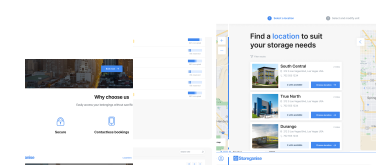
Get a complete view of the tools that power your business
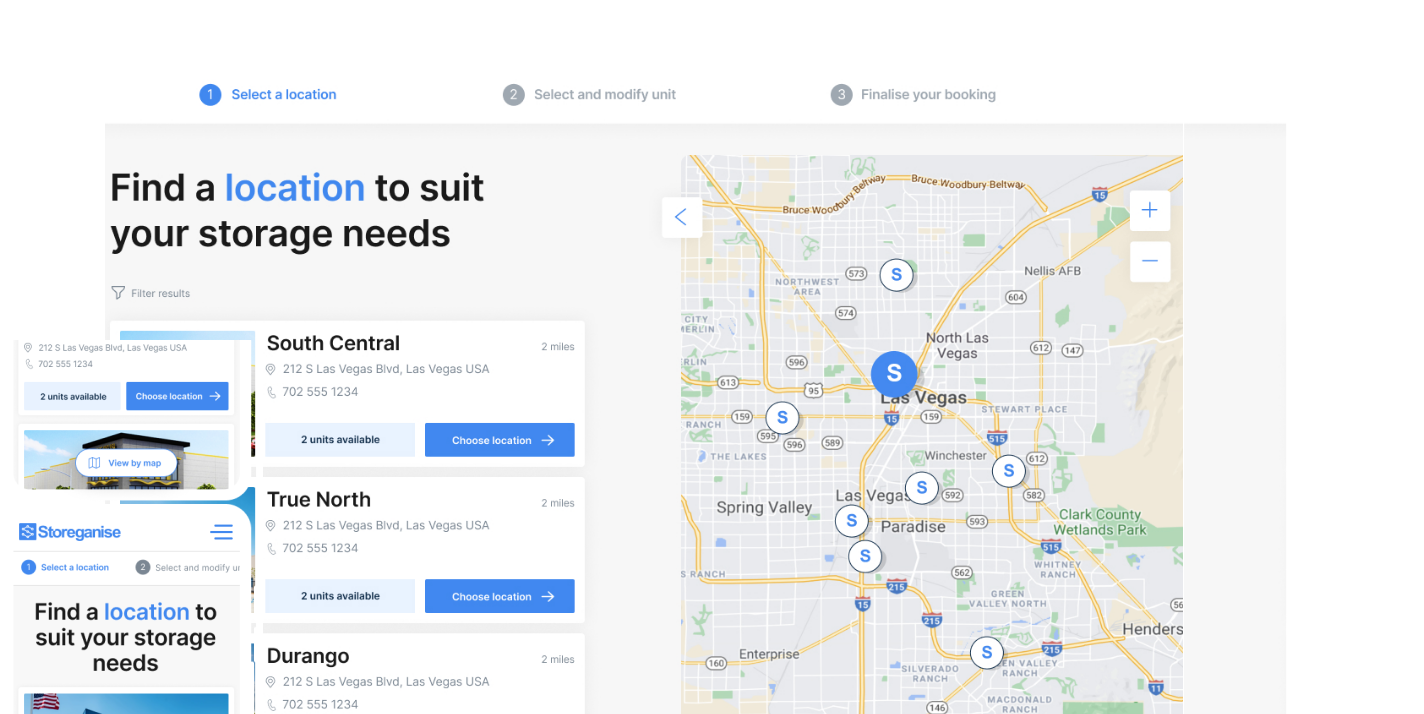
Let customers book and manage storage with ease
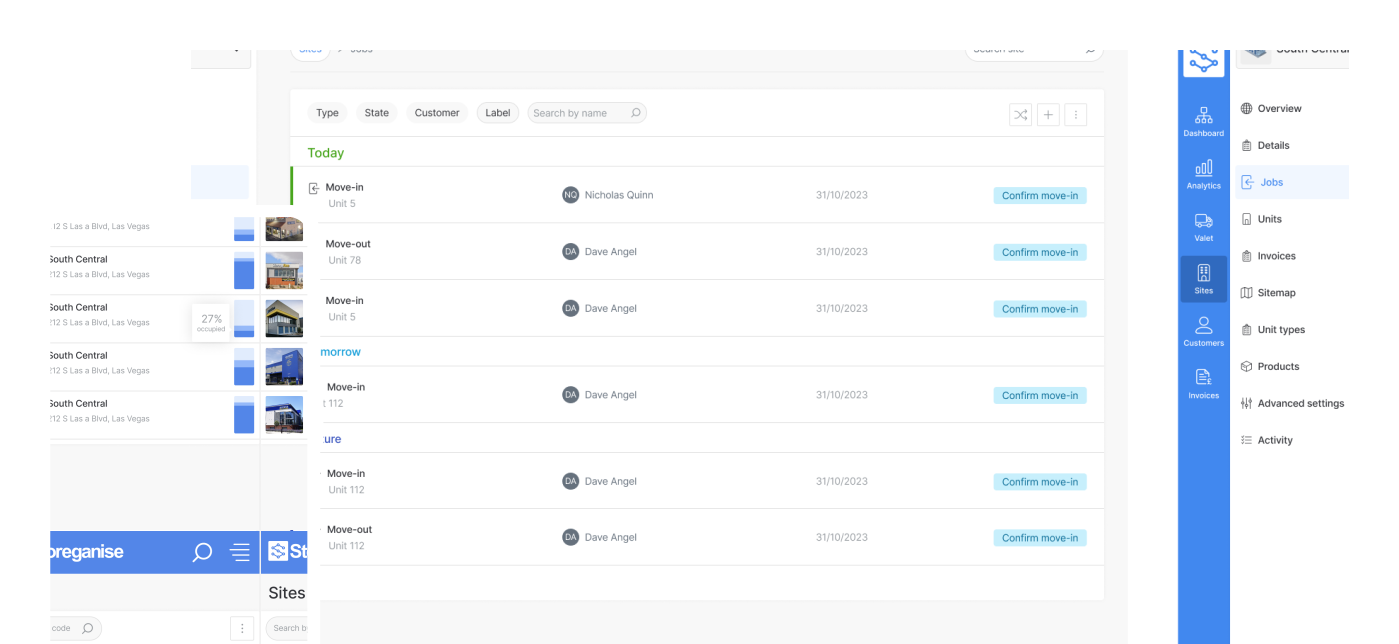
Manage your entire business in one place
Attract new customers with a website built for self-storage

Extend your business logic with endless integrations
Wondering how to invest in self storage? You are not alone. Many people see it as a viable investment opportunity in 2026 and look for tips for setting up a self storage facility.

Jack Colemanzo
2026-03-14
Self-storage is one of the most consistently high-performing asset classes in commercial real estate today, and the right self-storage software can help operators maximize efficiency and profitability. NAREIT confirms self-storage has delivered an average annual return of 16.85% over the past 25 years, outperforming apartments, retail, office, and even the S&P 500.
It offers strong portfolio diversification and a reliable passive income source. Yet many investors still overlook it simply because they do not know where to start.
This industry differs from other investment options in terms of stability, risk, and cash flow. Yet, Yardi Matrix confirms self-storage investment transaction volume hit $5.9 billion in 2025, exceeding the full-year total of 2024.
It’s a clear signal that the investor interest in this section remains very strong. With the right knowledge, you can equally position yourself for consistent, long-term returns.
We have compiled everything you need in this guide to make investing in storage units straightforward for beginners.

Experts view self storage investment as a flourishing business and a profitable investment opportunity.
Here are 6 reasons why investing in a self storage business is worth it.
Self-storage offers one of the most reliable returns in commercial real estate today. It combines low overhead, consistent demand, and flexible income streams that most property types simply can't match.
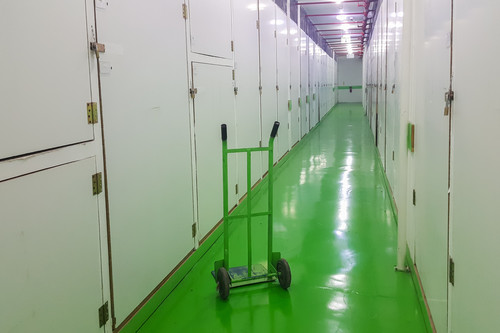
Self-storage has low operational costs and, therefore, lower business risks. Low operating costs mean high profit margins and better control over short-term revenue shifts.
If a tenant defaults, you hold a legal lien against their stored property.
The Self Storage Association confirms that a well-run facility maintains an operating expense ratio of just 25% to 40%, far lower than most commercial real estate types.
From students to large and small businesses, everyone needs a storage unit. High demand means you operate at capacity, generating consistent rental income month after month.
The Self-Storage Almanac 2024 confirms that over one-fifth of U.S. renters currently use self-storage. That steady pipeline of demand keeps your units from sitting empty for long.
Storage units maintain high occupancy due to the ongoing need for space. Unlike other real estate investments, revenue fluctuations here are minimal. That consistent tenancy makes cash flow predictable and reliable every single month.
Self-storage has proven resilient during tough times, including the 2008 financial crisis and the COVID-19 pandemic. Low operating costs and solid margins make it ideal for risk-averse investors.
NAREIT data confirms that in 2008, most REITs suffered significant losses while self-storage posted a positive 5% return. That counter-cyclical strength is a documented, proven advantage.

Self-storage infrastructure is simple and easy to maintain after the initial build. Good lighting, security, and fire protection cover the majority of ongoing needs.
Those lean costs directly explain why the Self-Storage Almanac reports self-storage carries around 70% net operating income, among the highest of any real estate asset class.
You can start from an empty building and scale once profits grow. Adding valet storage, truck rentals, or climate-controlled units meaningfully increases revenue per customer.
Report confirms self-storage NOI has grown an average of 4.4% annually since 2008, outpacing inflation by 190 basis points. That sustained growth gives operators real room to expand strategically over time.
It’s important to understand that nothing is ever completely risk-free. You must know about the key self storage investment risks to mitigate them effectively.
Here are 3 common risks that you may face when investing in this industry:
It’s important to understand that nothing is ever completely risk-free. You must know about the key self-storage investment risks to mitigate them effectively.
Self-storage is lucrative, but only if you position your facility in the right market. Locating competitors, understanding local demand, and building the right unit mix all require careful analysis upfront. Many investors underestimate this step and pay for it later.
Cushman & Wakefield confirms that self-storage valuations have declined for six consecutive quarters, directly reflecting how much poor market selection costs operators.
Without thorough local research, even a well-built facility can struggle to gain traction.
Self-storage is not a completely hands-off investment, despite what many assume. Security systems, management software, and utilities all need timely oversight and regular upgrades. You still need an expert team executing a clear business plan.
Research confirms that REIT-managed facilities achieve 92.3% occupancy while non-designated independent operators sit at just 87.2%.
That 5-point gap is driven almost entirely by management quality, and it translates directly into thousands of dollars in lost annual revenue.

Because self-storage is relatively easy to build, new supply enters markets quickly and intensifies competition. This can reduce demand for your particular facility significantly.
Multi-Housing News confirms that oversupply continues to weigh on rents in high-growth Sun Belt metros like Atlanta and Orlando, while markets with controlled supply maintain stable pricing.
Before you invest, knowing exactly where your market stands on this curve is non-negotiable.
Financing a self-storage facility is significantly more expensive than it was just a few years ago. Higher borrowing costs directly reduce your cash flow and tighten your net returns.
CRED iQ confirms self-storage interest rates now average 6.30%, up sharply from previous periods.
That cost of capital eats directly into your margins, especially for operators carrying floating-rate debt or facing near-term loan maturities.
Month-to-month leases give you flexibility, but they also expose you to sudden demand shifts. Tenants can leave with minimal notice, and occupancy can drop faster than you expect.
The January 2026 report confirms Sun Belt markets with over 8 square feet per capita face ongoing downward rent pressure as new supply keeps arriving.
Without a proactive retention strategy, short lease terms can turn a well-occupied facility into a struggling one quickly.
Before investing, you must understand how facilities are classified. The class of a property significantly affects pricing power, risk level, tenant profile, and long-term appreciation potential.
Class A facilities are newly built (typically within the last 10–15 years) and located in prime, high-visibility areas.
They usually include:
Climate-controlled units
Advanced security systems
Modern access control
Automated management software
Professional branding and marketing
These facilities tend to command higher rental rates, experience lower tenant turnover, and maintain strong occupancy levels. However, they also require higher upfront investment and often trade at lower cap rates due to lower perceived risk.
Best for: Investors seeking stability and long-term appreciation.
Class B properties are older than Class A (typically 15+ years old) but still functional and reasonably maintained.
They:
Lack premium features like climate control
Have older infrastructure
Require light renovations or operational improvements
These properties often present value-add opportunities. With strategic upgrades, better marketing, and improved management systems, investors can increase rental income and overall asset value.
Best for: Investors looking for moderate risk with upside potential.
Class C facilities are older properties, often located in secondary or tertiary markets.
They typically:
Offer limited amenities
Have lower rental rates
Require significant maintenance or operational upgrades
Operate in less visible locations
While these properties can be acquired at lower prices, they carry higher operational and market risks. Success depends heavily on market demand and strong execution.
Best for: Experienced investors comfortable with higher risk.
If you wish to invest in the self-storage market, there are four primary ways to enter the industry. Each option differs in capital requirement, level of control, risk exposure, and expected return.
| "This achievement is a testament to the company's steady growth and resiliency of the self-storage sector." -Joe Margolis, CEO of Extra Space Storage. |
|---|
Understanding how each approach works in practice will help you choose the one that aligns with your financial goals and risk tolerance.
One of the easiest ways to gain exposure to the self-storage industry is by investing in a Real Estate Investment Trust (REIT).
Self-storage REITs posted sector FFO growth of 12.5% year-over-year in Q3 2025.
Self-storage REITs own and operate multiple storage facilities across various regions and generate income by renting units to individuals and businesses.

When you invest in a self-storage REIT, you are purchasing shares in a company rather than owning a specific property. Returns are typically generated through dividend distributions and share price appreciation.
This option is attractive because it allows you to participate in the growth of the self-storage market without managing properties or dealing with tenants.
However, returns are influenced by public market conditions, interest rates, and overall economic performance, not just the operational success of storage facilities.
Self-storage REITs earn income from:
Rental revenue
Administrative and management fees
Tenant insurance programs
Late fees and ancillary services
Low capital requirement
High liquidity (you can buy and sell shares easily)
Fully passive investment
Diversification across multiple properties
No control over operations or strategic decisions
Share price volatility
Exposure to broader stock market risk
Returns may be limited compared to direct ownership
If you have sufficient capital, purchasing an existing self-storage facility allows you to acquire a functioning business with an established income stream.
This approach gives you full ownership of the property, land, tenant base, and operational systems.
Unlike development, buying an existing facility provides historical financial data, occupancy records, and rent rolls that allow you to evaluate performance before investing.
For many beginners, this route is less risky than building from scratch because it avoids construction and zoning uncertainties.
Investors often increase profitability by improving operations, adjusting below-market rental rates, upgrading security systems, implementing automation software, improving marketing, or optimizing unit mix.
As the facility stabilizes and revenue increases, the property value typically rises as well, creating both cash flow and equity growth.
Review commercial loans, SBA financing, private lending, or equity partnerships. Assess loan-to-value ratios, interest rates, repayment schedules, and how debt service will impact projected cash flow.
Analyze at least 2–3 years of financial statements, occupancy trends, expense breakdowns, and tenant turnover rates. Conduct a physical inspection of roofs, pavement, lighting, drainage, fencing, and security systems. Verify zoning compliance and anticipate potential property tax reassessment.
Determine whether you will self-manage or hire a professional management company. Strong operational systems, automated billing, and effective marketing are critical to maintaining high occupancy and maximizing returns.
Immediate revenue generation
Full control over pricing and operations
Value-add potential through operational improvements
Faster path to profitability compared to development
Long-term asset appreciation
High upfront capital requirement
Unexpected maintenance or capital expenditures
Misjudging local market demand
Increased taxes or insurance after acquisition
Competitive pressure from new developments
Building a self-storage facility from the ground up offers maximum control over design, layout, unit mix, and branding. Investors can select strategic locations, incorporate modern security systems, and design facilities to meet current market demand.
However, development is significantly more complex than acquisition. It requires land acquisition, zoning approval, construction management, contractor oversight, and substantial capital reserves.
In addition, newly built facilities typically go through a lease-up period, which can take several years before reaching stabilized occupancy.
While development may cost less per square foot than purchasing a fully stabilized facility, the execution risk is higher. Construction delays, cost overruns, and overestimating demand are common challenges.
Full control over layout and design
Ability to build a modern, Class A facility
Premium rental pricing potential
Strong long-term valuation growth
Higher market and construction risk
Capital-intensive and time-consuming
Extended lease-up period
Requires deep market research and industry knowledge
Success heavily depends on strong marketing and operational systems
Self-storage syndication involves pooling capital with other investors to acquire or develop storage facilities. A sponsor or management team handles operations, financing, and execution, while investors participate as limited partners.
This option allows investors to access larger, professionally managed deals without direct involvement in day-to-day operations.
Returns typically come from periodic cash flow distributions and profits upon sale or refinancing.
However, syndications are generally illiquid. Capital is often committed for several years, and performance depends heavily on the sponsor’s expertise and strategic decisions.
Before investing, it is essential to evaluate:
Sponsor track record
Fee structure
Projected return assumptions
Exit strategy
Risk disclosure documents
Passive involvement
Access to larger institutional-quality projects
Potentially higher returns than public REITs
Risk shared among investors
Illiquidity (capital locked for the investment term)
Limited control over operations
Dependence on sponsor performance
Due diligence complexity and potential fraud risk
Investing in self-storage syndicates, stocks, or REITs does not involve any input from the investors except the funding. However, building or buying a storage facility is an active investment.
These self-storage investment approaches require a lot of research and analysis to generate a good return on investment. When you choose to invest in building or buying a self-storage facility, it’s advised that you look into these 5 aspects:
Conduct thorough market research to identify areas with high demand and limited supply of storage units. Analyse population growth, local economic factors, and competition to ensure a favourable investment climate.
Evaluate the financial aspects of investing in storage units. Consider purchase price, operating expenses, rental rates, and potential return on investment. It's essential to work with a financial advisor or real estate professional to assess the economic viability of the investment.
Location is one of the major deciding factors in how successful a self-storage business will be. For self-storage investments, choose a location with a considerable population, commercial activity, or residential developments, and avoid basing your decision on projections. Prioritise locations that offer convenience and accessibility to potential customers. Additionally, consider storage unit features such as security systems, climate control options, and unit sizes to cater to diverse customer needs.
Understanding your target customers and knowing their habits is important to cater to their needs. As an investor, you must know the consumer habits of your target market to allocate your resources thoughtfully.
The major target customer groups for self-storage are residential, commercial, students, and military personnel.
To earn maximum return on your investment in self-storage, you need to control risk factors as much as possible. Prior planning and market research can help you minimise certain risks and maximise your ROI.
Self-storage investment is different from other forms of real estate investments. Despite its growing popularity, positive growth trend, and resilience against recession, self-storage investing is not for everyone.
Knowing how to invest in self-storage is not enough when making the investment decision. There are many reasons to invest in this industry and many others for not making this decision.
You must define your storage unit investment objectives clearly and thoroughly analyse the self-storage opportunities and risks. Consider the long-term impact; it will help you make the right decision.
Self-storage is here to stay. The positive growth trends, along with efficient self storage management software and advanced security systems, make it a lucrative investment opportunity. However, ensure you’re well prepared to enter this competitive market by seeking professional guidance. This will help you gather information and make better self-storage investment decisions.
To guarantee a successful investment, understand the market dynamics, conduct thorough research, and follow a diligent purchasing process. Remember to consult with professionals and stay updated on industry trends to capitalise on the potential of self-storage investments
Yes, there is a self storage ETF. Global Storage Inc. is a popular self storage REIT ETF. The company has a successful business model with a high dividend yield and reliable performance.
Yes, self storage is a profitable business. The profitability of each self storage business varies due to several internal and external factors. The average profit margin in this industry is 41%.
Some common risks in the self storage industry are:
Public Storage is the largest self storage company in the US. The company owns around 2,787 locations all around the world. It offers more than 142 million square feet of storage space with 12 different storage unit sizes.
Typically, the profit margin for self storage business is 41%. It may vary from business to business depending on various factors such as the location, size, pricing, and amenities offered by the business.
To buy stock in Public Storage, you must follow these steps:
Yes, the self storage market is growing. The Wall Street Journal called it recession-resistant due to steady growth irrespective of economic slowdown. As more people switch to hybrid or remote working, the self storage market will continue booming.
Yes, starting a storage business is a good idea. It is a good source of steady passive income with low maintenance required. The success rate for a self storage business ranges between 90% and 92%, which is pretty high.
Yes, self storage businesses generate passive income. This business has low risks and performs well even during economic downturns. The main source of income from a self storage business is the net rental income after deducting the mortgage (if any).
Self-storage cap rates have averaged around 5.8% over the past six quarters, with Class A assets trading between 5.0% and 5.5%, while Class B assets typically fall in the 5.5% to 6.5% range. Your market, location, and asset quality will shift that number significantly.
A self-storage facility typically generates a profit margin of around 41%, though high-performing facilities in prime locations can exceed 50%. That makes it one of the strongest margins in commercial real estate.
36 months, roughly three years, is the safe industry expectation for reaching stabilized occupancy. Competitive markets or oversupply can stretch that further. Don't plan your finances around anything faster.
Not entirely, but it is recession-resistant. During the Great Recession, all other commercial real estate segments posted net losses of 25% to 67%, while self-storage actually posted a 5% gain in 2008. However, oversupply in your local market can still hurt you regardless of the broader economy.
They're more liquid and have a lower barrier to entry. Self-storage REITs typically deliver total returns of 6% to 10%, while direct private ownership can target 10% to 20% annually. REITs offer stability. Direct ownership offers higher upside but also more operational risk.

Jack Colemanzo is the Head of Sales at Storeganise, based in Barcelona. With a strong background in the technology industry, spanning software development, sales management, and team leadership, Jack is a catalyst for growth and a builder of positive team culture.
View bio