Product overview
Get a complete view of the tools that power your business
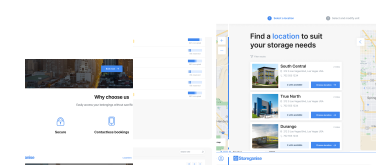
Get a complete view of the tools that power your business
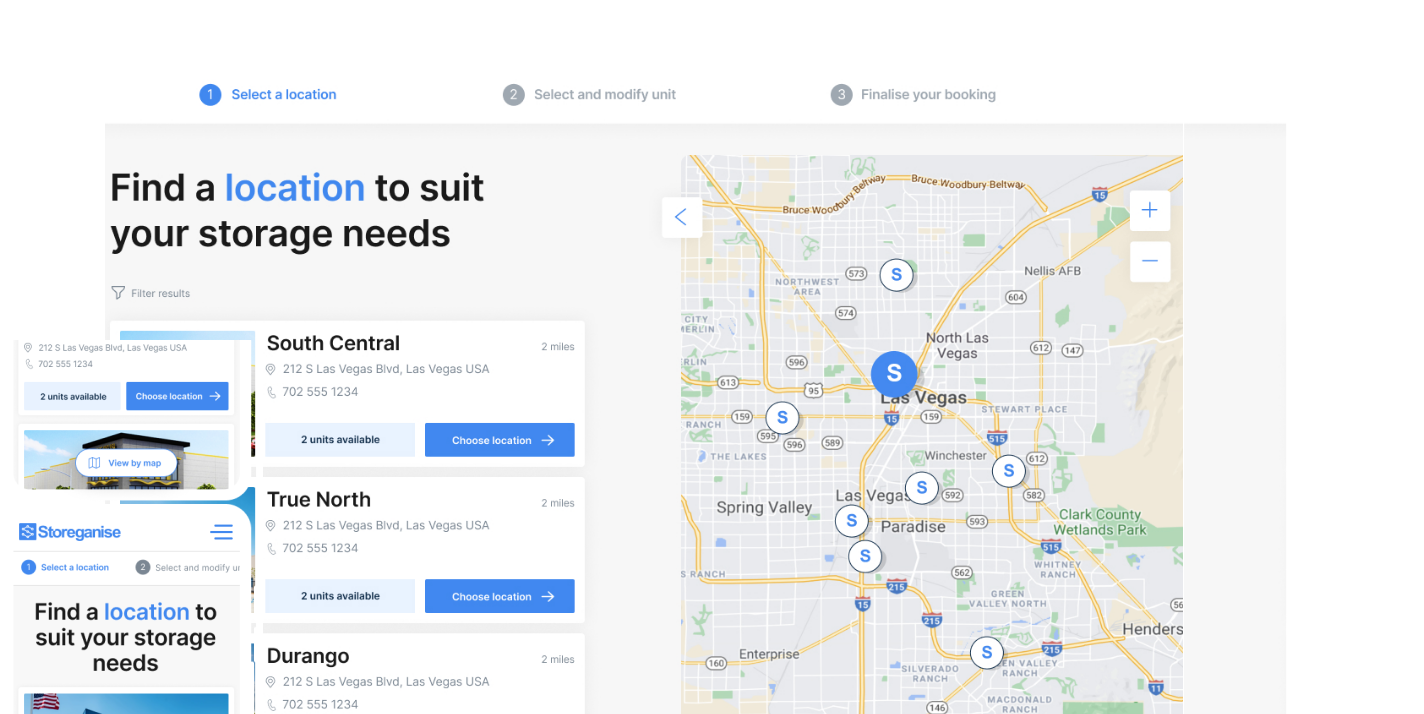
Let customers book and manage storage with ease
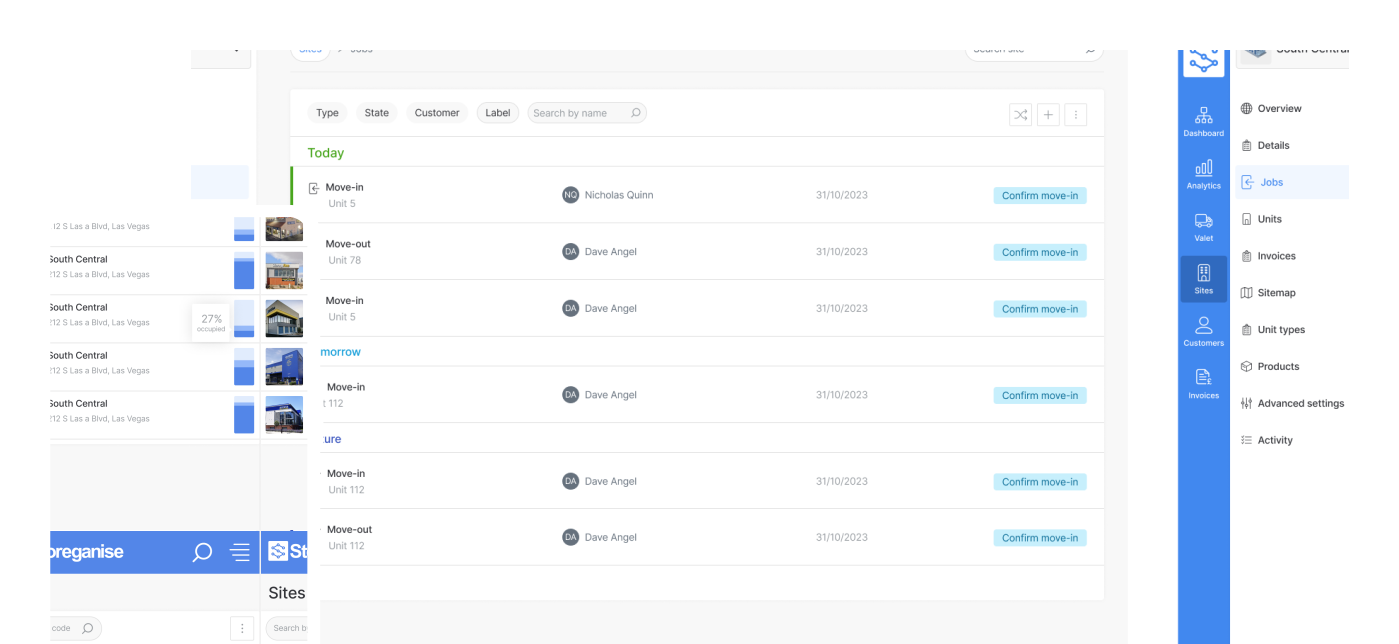
Manage your entire business in one place
Attract new customers with a website built for self-storage

Extend your business logic with endless integrations
Find out how to best keep track of company finances. In this post, we'll go over the best practices and methods of tracking expenses for your self storage business.

Jack Colemanzo
2025-02-14
As with any other businesses, the success of your self-storage company will be primarily determined by your bottom line. Given that, it’s extremely important to keep track of your cash flow, which incorporates your profits, revenues, expenses, and any other spending. While some managers might think this to be an afterthought, keeping good track of your company’s expenses is vital to making sure your business is running as efficiently as possible, and that you are maximising your profits. Here, we’ll discuss why it’s so important to keep good track of your expenses, as well as some best practises for your business to follow.
Learn The Exact Steps on How To Set Up Your Self Storage Facility In This 5 Minute Read
Key Lessons from Industry Experts
The Psychology of Self-Storage Pricing
How to diversify your revenue streams
Steps to set you up for success
Many managers might question the need for such meticulous tracking of your businesses’ expenses. After all, as long as you’re getting consistent customers or new tenants, you can’t be losing money right? While that might be true, it doesn’t mean your business is running the most efficiently it can, and thus it isn’t generating the maximum amount of profits it could. Tracking your expenses carefully lets you gain an insight into how your business is doing financially, showing you whether your business is on track, and also gives you a much firmer understanding of how to improve.
Consistently tracking your expenses will also mean you have a complete understanding of your company’s finances, and importantly this means you can make decisions as to whether you’re spending your money effectively. If you see that there are recurring payments to a software or service you don’t use anymore, you can easily shave off your expenses to keep your profits as large as possible. Also, looking through your bills carefully might reveal certain issues on your facility you weren’t previously aware of. For example, an unexpected rise in your water bills might signal a problem in your plumbing you had not found yet. At the end of the day, there are many side benefits to keeping track of your cash flow, but as a business owner it is essentially just good practice to know where money is coming and going.
Categorise your spending
Splitting your spending up into different categories makes it much easier to see which areas you’re spending the most and least money in. Leverage this when you’re making key budgeting decisions. While there are many different ways to categorise your spending, most common categorising examples are:
Marketing expenses
Rent, utilities and phone costs
Outsourcing services, e.g accounting
Payroll and benefits
Office expenses, e.g supplies
Travel expenses
Have effective systems and procedures for staff
Perhaps the biggest way managers fail to track their expenses properly is when their staff don’t know what procedures are in place to do it properly. Make sure that you have an established system and that all staff members are appropriately trained. Key mistakes are charging personal expenses to the business, forgetting to keep receipts, or not submitting receipts for bookkeeping.
Leverage technology
As with many other aspects of business, you can and should use technological solutions to help you keep track of your expenses more easily. Accounting software can basically do most of it for you. It will categorise your spending automatically and log expenses when connected to a bank account by itself as well. Alternatively, even a simple Excel spreadsheet is extremely helpful when you know how to use it. Furthermore, cloud storage services are a really good tool to help you and your staff keep track of receipts. Simply upload them and they’ll be there when you need them.

Set monetary and budget goals
We’ve mentioned multiple times that having goals and tracking your goals is the most effective way to keep your business on track. When it comes to your expenses, it’s no different. Make sure that you set measurable and reasonable goals that are also time-limited. These might be to increase spending in a certain area, or to cut down funding in another by a certain time. Having these goals will help you conceptualise where you are in terms of progress. Tracking them knows where you’ve potentially gone wrong, and thus can let you plan on how to correct it.
Tracking your expenses is vital to an efficient well-run business. While it might be an afterthought to some managers, we hope that we’ve convinced you to keep a closer eye on your cash flow, and train your staff to do the same.
Related Article: 10 metrics every self storage business owner should be tracking
A typical self storage expense ratio is around 35% to 40% of Gross Operating Income (GOI). This ratio tells us that for every dollar earned in revenue, approximately 35 to 40 cents are used to cover expenses. The ratio can vary among self storage businesses depending on factors such as location, operational efficiency and market conditions.
The common expenditures included in the expense ratio include facility management fees, maintenance expenses, insurance, property taxes, and marketing costs.
Storage expenses typically refer to the costs incurred in keeping and managing goods or inventory. This may involve renting or leasing a storage space and expenses related to maintaining and organising the inventory. If the inventory is essential for the business to function, these storage costs are usually categorised as operating expenses.
Storage costs refer to the money you spend when keeping things in storage. These costs can be divided into two types: direct and indirect.
Self-storage service refers to a convenient storage solution where individuals can easily access and manage their own storage space.
The 1% expense ratio is a fee that investors pay each year to cover the costs of managing and promoting a fund. It is calculated as 1% of the total amount you have invested in the fund.
For example, if you have invested $1,000, you will be charged $10 annually as an expense ratio. These fees are deducted automatically from your investment, so you might not notice them immediately.

Jack Colemanzo is the Head of Sales at Storeganise, based in Barcelona. With a strong background in the technology industry, spanning software development, sales management, and team leadership, Jack is a catalyst for growth and a builder of positive team culture.
View bio