Product overview
Get a complete view of the tools that power your business
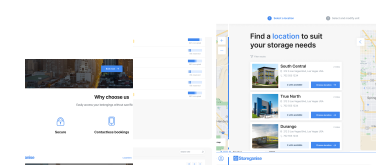
Get a complete view of the tools that power your business
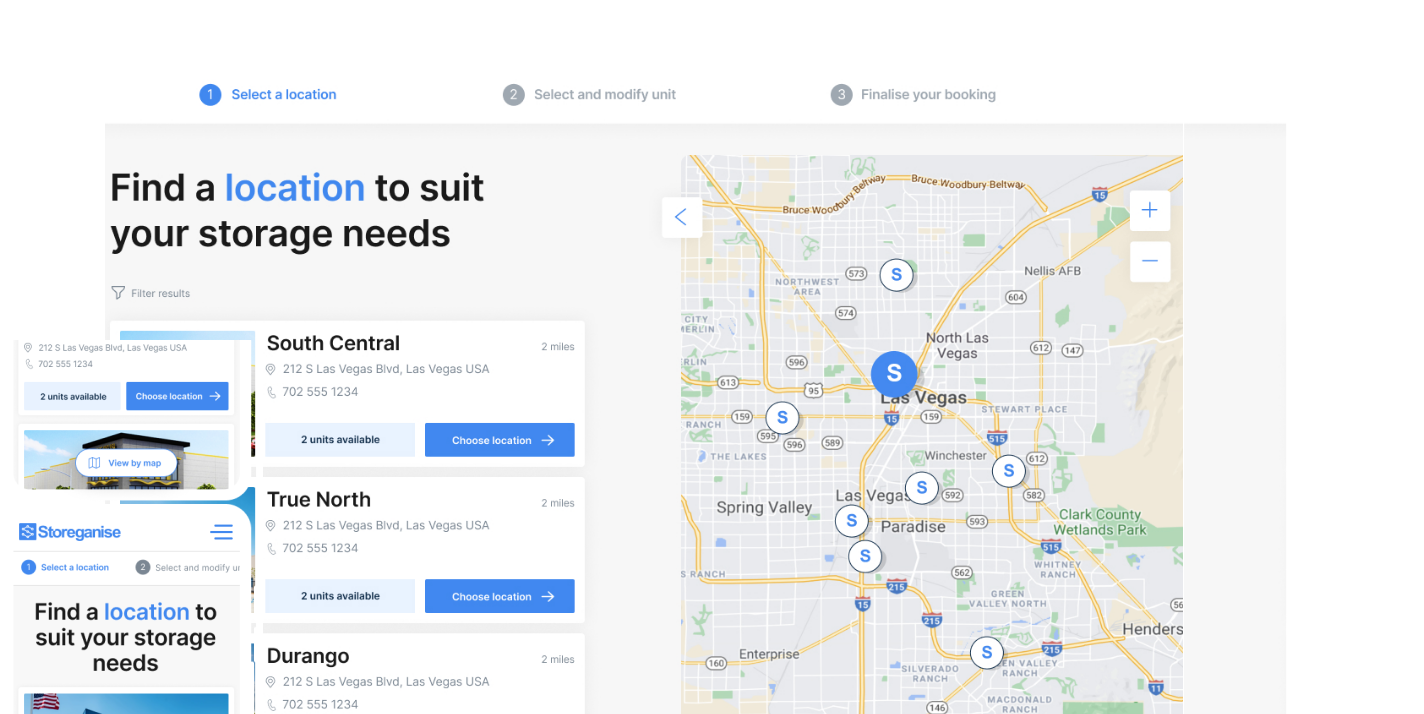
Let customers book and manage storage with ease
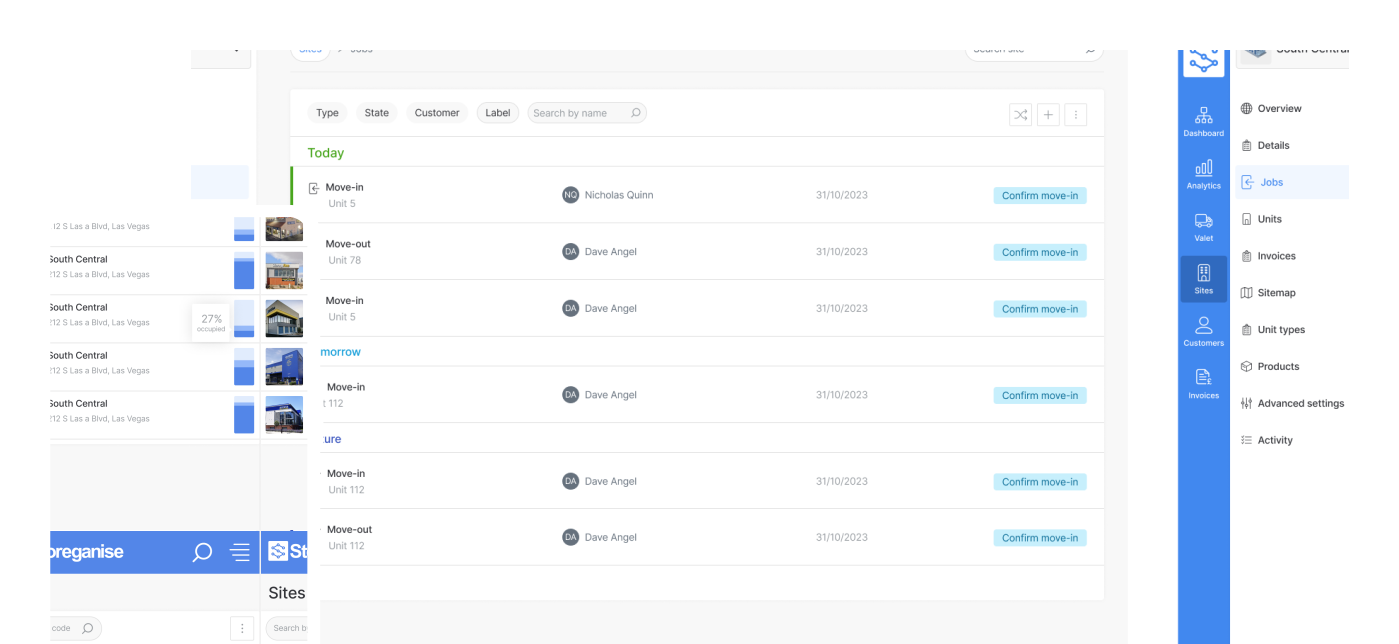
Manage your entire business in one place
Attract new customers with a website built for self-storage

Extend your business logic with endless integrations
Don't start on your construction project without considering the self storage building costs in 2026.

Jack Colemanzo
2026-01-03
Self-storage building costs vary widely based on facility type, size, and location
Construction costs typically range from $25 to $75 per square foot, excluding land and site work
Land, materials, labor, and site preparation make up the largest portion of the total development cost
Choosing the right facility type directly impacts both construction cost and long-term returns
Profitability depends heavily on location, target market, and smart investment in technology and amenities
Self storage businesses have successfully gained investors’ attention due to the lucrativeness of the trade. Over time, more people have entered the self storage business sector as a source of steady passive income. Self storage business has become significantly popular worldwide in the past few years compared to 2018 when the US self storage market accounted for 90 percent of the total self storage inventory.
When establishing a self storage business, you have two popular options. You can either buy an existing facility or build a new one. Building a storage facility from scratch is complicated but offers some valuable benefits. If you choose this option, you must think, “How much does it cost to build a self storage facility?”.
If you have been thinking of building a storage facility, here is a comprehensive guide to self storage building costs. It answers all your questions and offers some valuable insights into this industry.
Once you're up and running, check out our self storage management software which can help increase profits and streamline your operations.
.jpg)
According to Forge Buildings, bad soils, steep topography, and missing utilities alone can silently add $100,000 to $400,000 to your total development budget before a single unit gets built.
Before any lender funds your project, they require a Phase I environmental assessment. According to Metal-Buildings.org, these tests run $2,000 to $4,000 upfront.
If contamination is flagged, a Phase II assessment follows, adding thousands more before construction even begins.
Getting power and water to your site costs far more than most developers expect. Climate-controlled facilities carry heavy electrical loads that often require a dedicated transformer.
According to Storage Authority Franchise, utility connection fees alone regularly blindside first-time developers during the budgeting stage.
Every new facility creates runoff that municipalities now require you to manage. According to Metal-Buildings.org, detention ponds or underground drainage systems cost between $25,000 and $100,000, depending on site size. Most developers only discover this requirement after committing to a site.
Most developers size their electrical system for day one only. That is a costly mistake. According to Metal-Buildings.org, upgrading undersized electrical service later costs $50,000 to $150,000. Sizing it correctly upfront adds just $5,000 to $15,000 more to your original build.
Permits, architectural drawings, engineering reports, and legal fees quietly drain your budget.
According to Storage Authority Franchise, permit fees alone range from $10,000 to over $40,000. Budget 10 to 15% of your total hard costs specifically for soft costs from the start.
A site needing rezoning can silently destroy your project timeline and budget. According to Metal-Buildings, challenging approvals add $50,000 to $150,000 in costs and delay your start by 6 to 18 months.
Building a self storage facility is a decision that requires thorough research and critical analysis of your situation. Before investing in this industry, you must ask yourself these vital questions. They will help you decide if this lucrative business is right for you.
The answer to each question gives you a better picture of what you need to do and is found below.

According to Self Storage Association UK, the first self storage facility appeared in the USA in 1960, from which it has grown to 53,000 storage facilities. Before building a storage unit, you must decide what storage facility you want to develop.
This is an important factor for determining self storage building costs. The following are the four main types of storage facilities.
Warehouse storage is a common type of storage facility built for bulky storage. It is usually spacious and modern with climate control features. This storage facility is ideal for businesses that rent storage units to store their inventory.
.jpg)
Some warehouse storage facilities offer round-the-clock easy access to customers. The average size of a warehouse storage space can range between 10,000 square feet- 25,000 square feet. On the other hand, the rental space is usually around 1000 square feet.
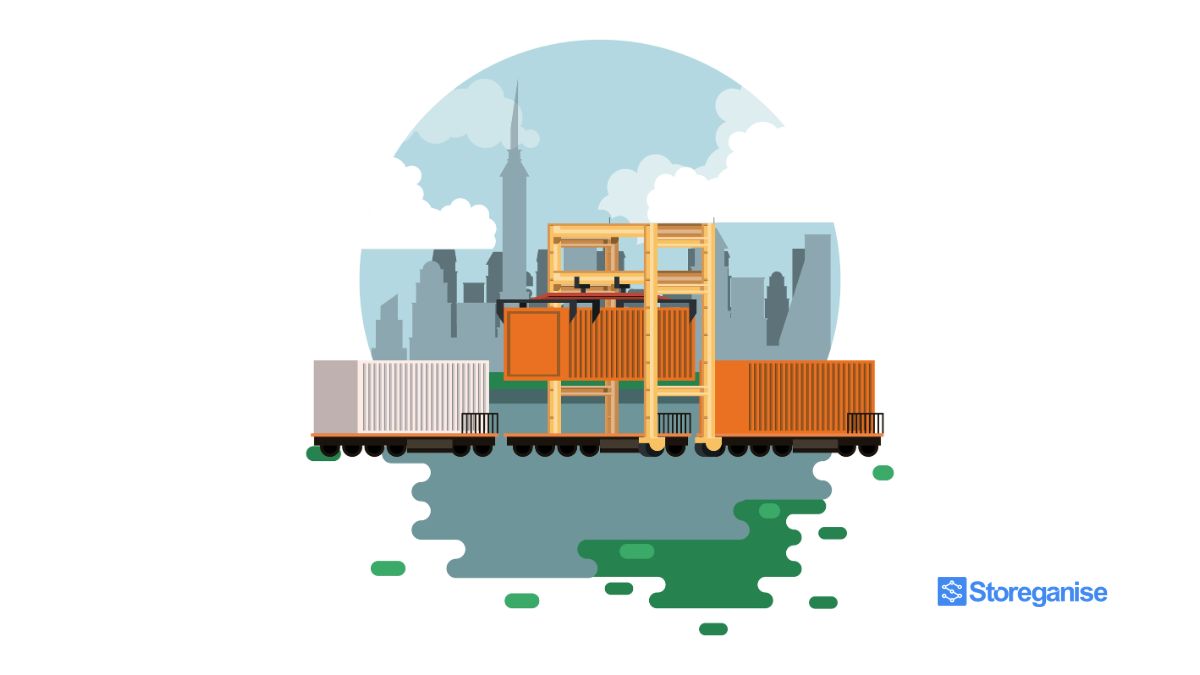
As the name indicates, container storage facilities are made of empty shipping containers arranged in a secure setting. The rental space in container storage can be around 40 to 120 square feet. This storage unit is suitable for those who want to store a few items for the short or long term.
Since the storage unit size is small, the rental rates are also lower than the warehouse storage unit. They are comparatively easier to build and manage and, therefore, suitable for new entrants in the market.
A lockup is also known as a garage rental unit or a lockup garage. They are usually smaller than other types of storage facilities and cheaper also. The rental space offered by this type of storage unit is around 124 square feet, and is a popular size.
You can easily build lockups in residential buildings at a cheaper cost. The security at these storage units is usually less than the warehouse storage facilities and depends solely on the quality of garage doors.
Sometimes known as furniture depositories, removal depositories are used for storing furniture and other household stuff between moves. Removal companies use these storage facilities while shifting people’s belongings from one place to another.
The security at removal depositories is usually very high with climate-controlled conditions. They can be single or multi-storeyed, depending on your plan.
While calculating self storage building costs, you must consider the type of storage facility your plan to build. Other important factors are discussed in the next section.
While these are the most common types of storage facilities, the self-storage industry is also seeing a rise in more specialised construction projects. For those interested in tapping into a niche market, building a boat storage facility presents a unique opportunity. This specialised venture requires specific design and construction considerations, which are detailed in our comprehensive boat storage building guide.
You can reduce self-storage building costs significantly without sacrificing returns. The key is making smarter decisions early on design, materials, phasing, and site selection before costs lock in permanently.
You do not need everything built on day one. Start with 50 to 60 units and let phase one revenue fund phase two naturally. That way, you grow alongside real demand instead of betting everything on projections before a single tenant signs up.
Custom sizes quietly drive up engineering fees and material waste. Standard dimensions, on the other hand, keep fabrication costs predictably low.
Your contractor can price them far more competitively, and that saving goes straight back into your budget.
Before committing to vacant land, look at empty retail spaces or warehouses first. These already have foundations, roofing, and utilities in place.
That means you skip site preparation and structural groundwork. These two stages that consume a significant chunk of any ground-up budget.
Pricing for identical work varies widely across contractors, even within the same market. So send your plans to at least five before deciding.
That single step creates genuine competition, and the savings often cover your entire soft costs budget comfortably.
Adding climate control too early is a risk you simply do not need to take. Launch with standard units first.
Once occupancy stabilises and demand becomes clear, adding it in phase two becomes a data-backed decision rather than a costly assumption.
Self storage facilities vary in size and type, so there is no one answer to what a self storage building cost is. The average self storage building cost depends on the location, size of the storage facility, type of construction, prices of the construction material, and other variables.
You need to know the self storage construction cost per square foot to get a better idea of the projected cost. That said, here is a quick estimate of the average self storage building cost for reference.
Once you have built a self storage facility, you need reliable self storage software and other resources to make it operational.
To calculate a realistic estimate of self storage total development costs, you must consider some vital costs. They are essential components affecting the net construction cost of a storage facility.
You need a piece of land at an ideal location to build a self storage facility. Land cost is a significant component of the self storage building cost. Land cost depends on various factors, including location, market rate, and economic conditions.
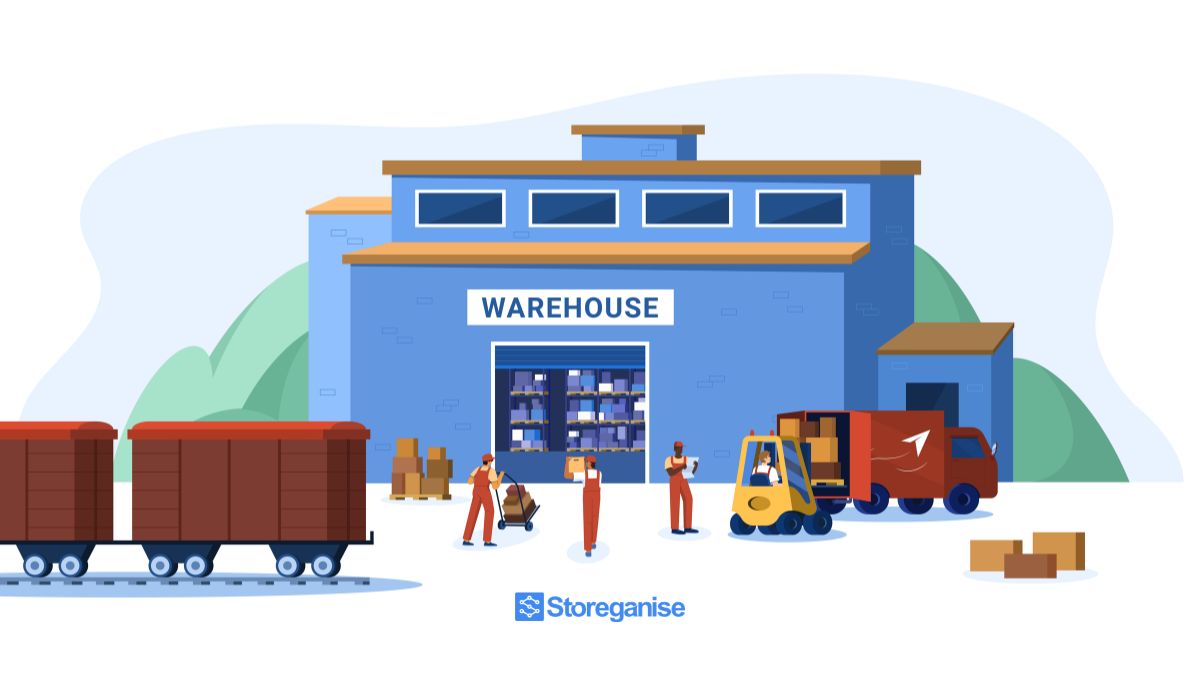
Usually, the storage facilities built in rural areas have limited self storage marketing outreach and online presence. Therefore, a higher number of self storage facilities are built in urban and suburban areas.
How does that affect the cost? Understand it by the following example;
This is a simple example of how different factors can affect land costs. In real-life settings, various other determinants also affect the cost of land.
Usually, the most important material used in the construction of storage facilities is steel. It is also one of the costliest among other materials. The cost of these materials can vary significantly in different markets.
For instance, the cost of some materials may be higher in urban markets while lower in rural areas or vice versa.
The cost of labor involved in building a self storage facility may vary depending on various factors. Some of them can be;
Whatever the reason, you cannot ignore this crucial component of the total set-up cost. Do a market survey or consult a professional to determine the projected labor cost in your construction and development budget.
The site you have chosen for building your storage facility may need some work. You must invest in site preparation to bring it into a workable condition. Site preparation may involve clearing the land, removing vegetation, or making drainage arrangements.
The amount spent on these developmental activities adds to the property's value. It is, therefore, an important determinant of self storage building costs. The cost may be as low as $5 per square foot or as high as $80 per square foot.
Several additional expenditures are a part of the initial self storage business costs. It includes marketing expenses, operating expenditures, moving and packing supplies, and other miscellaneous expenditures. They can sometimes consist of a major chunk of the total construction cost.
Some important factors directly affecting the self storage building cost are listed below.
Your investment in self storage business is only worth it if you can generate significant returns. The business needs to generate more profit than you could have earned by investing elsewhere. If not more, then at least equal to the expected return of some other investment project.

So how do you know if your business can generate steady returns? The success of a self storage business depends on some crucial factors. Furthermore, for those considering real estate property investment, a well-managed self storage facility can offer a compelling and relatively passive income stream, making it an attractive option in a diversified investment portfolio."
The site where you develop a self storage facility plays a vital role in the success of your business. Finding an ideal location seems challenging, but the effort you put in is worth it. So, what do we mean by the right location? It refers to a site with the following;
Choose a visible location to attract customers within your allocated budget.
Restrict yourself to 25%-30% of the total self storage building cost budget for land purchase. This leaves you with sufficient funds for the construction and development of the storage facility.
You have to be specific about the audience group you are targeting. Deciding the type of storage service you render to streamline your business operations is essential. Usually, the following are the storage services generally offered by storage facilities.
Once you know the specific scope of your storage services, you can channel your operations better.
Building a huge storage facility will offer no significant returns if it is not valuable for customers. To develop an unmanned administration system, you must invest in the right technology. You will need trusted self storage software to manage the facility remotely.

Similarly, you need advanced locks, automatic gates, and efficient surveillance technology to offer a secure environment to the customers. It all requires careful planning and thorough research for better utilization of funds.
Why would someone choose your newly constructed storage facility over other competitors? Give your customers reasons to prefer you to quickly reach the breakeven point in your business. Offer benefits that the competitors don’t offer and that fit your budget.
Some valuable features that attract customers include climate-controlled systems, 24/7 access, advanced security systems, and virtual monitoring. Offering these amenities may increase your total cost, but it helps you generate your targeted return on storage investing.
Yes, building a self-storage facility is worth it under the following conditions;
Building a self-storage facility can offer some amazing pros to some businesses but may not work for others. Every self-storage business is unique in various aspects, including business objectives and future plans. You must do your research to make your decision.
The good performance of the self-storage sector has made it an excellent investment opportunity. If you wish to construct a self-storage facility from scratch instead of buying an existing one, you must consider different aspects of the self-storage building cost. Doing a critical cost-benefit analysis can tell you if building a self-storage facility is feasible for you.
Related Article: How many Storage Units fit per Acre? Storage Building Guide
The profitability of each self storage location depends on various factors and, therefore, varies. However, on average, self storage locations can earn around $150,000-$500,000 a year.
The average size of a storage facility is around 45,000-50,000 square feet. Usually, the storage facilities can range between 10,000-100,000 square feet with multiple rentable storage units.
Yes, the self storage business is still a good investment. It is less risky, with fewer complications, low operating costs, low breakeven, and higher return. You can make significant profits with a self storage facility.
Yes, owning a storage facility is a good investment. You can develop it into a well-maintained business, personal, or vehicle storage and earn a steady income. Owning a storage facility eliminates the initial self storage building cost. You can earn a return on investment with fewer operational cost implications.
The three main types of storage facilities are moving company storage, self storage facilities, and mobile storage units.
The most popular self storage unit size is 10x10. It offers approximately 100 square foot area and can fit in the contents of two bedrooms. The medium-sized storage unit is popular among individuals as well as small businesses.
Yes, self storage businesses are profitable in the UK. According to Self Storage Association UK, the industry’s total turnover in 2021 was approximately £930 million
Yes, owning a storage facility is profitable. You can rent storage units to people who need them and earn profit in the form of rental income. A self storage business does not require a lot of staff or fancy maintenance. You can earn significant profit even after deducting the operating expenditures.
The 4 main types of storage facilities are warehouse storage, container storage, lockups, and removal depositories.
Climate-controlled storage facilities, non-climate-controlled storage facilities, portable container storage, and information management systems are the main types of storage facilities.
The most affordable option is single-story, drive-up metal units on lower-cost land. Using pre-engineered steel buildings and phased construction helps reduce upfront capital and risk.
Most mid-sized facilities require 2 to 5 acres, depending on layout and unit mix. Multi-story designs can reduce land requirements but increase construction costs.
Construction typically takes 6 to 18 months, including permits and site preparation. Delays often come from zoning approvals, weather, or contractor timelines.
Yes, storage facilities are usually built on commercial or light industrial zoned land. Always verify local zoning laws before investing, as restrictions vary by region.

Jack Colemanzo is the Head of Sales at Storeganise, based in Barcelona. With a strong background in the technology industry, spanning software development, sales management, and team leadership, Jack is a catalyst for growth and a builder of positive team culture.
View bio